Summer 2026 · Software Developer
PixelScan WSI
Whole-slide imaging for the microscope you already have — a C++ desktop app that stitches a live camera feed into gigapixel slides, with a viewer, measurements and SVS / OME-TIFF export. Shipped on the Microsoft Store.
- C++
- OpenCV
- libvips
- Microsoft Store
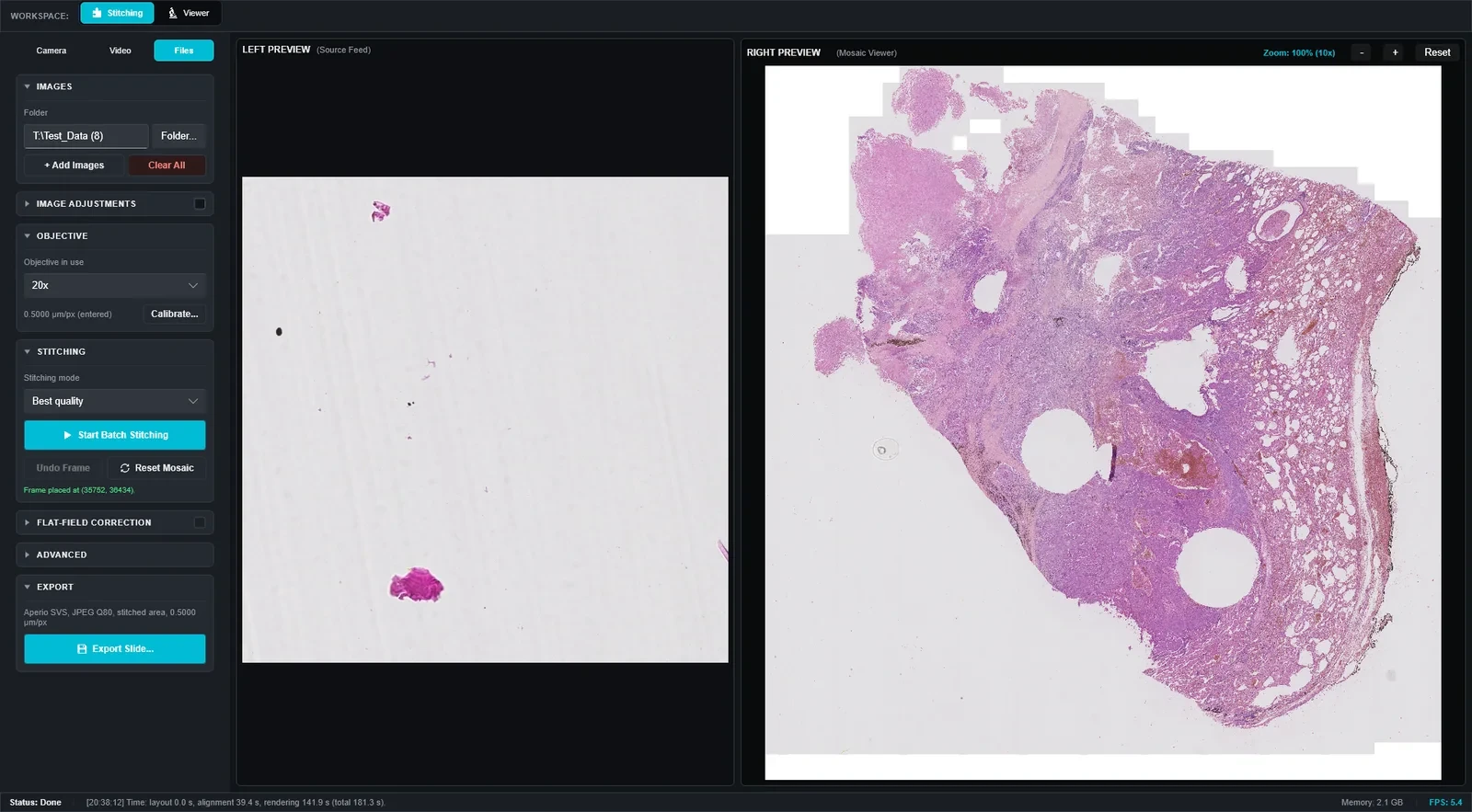
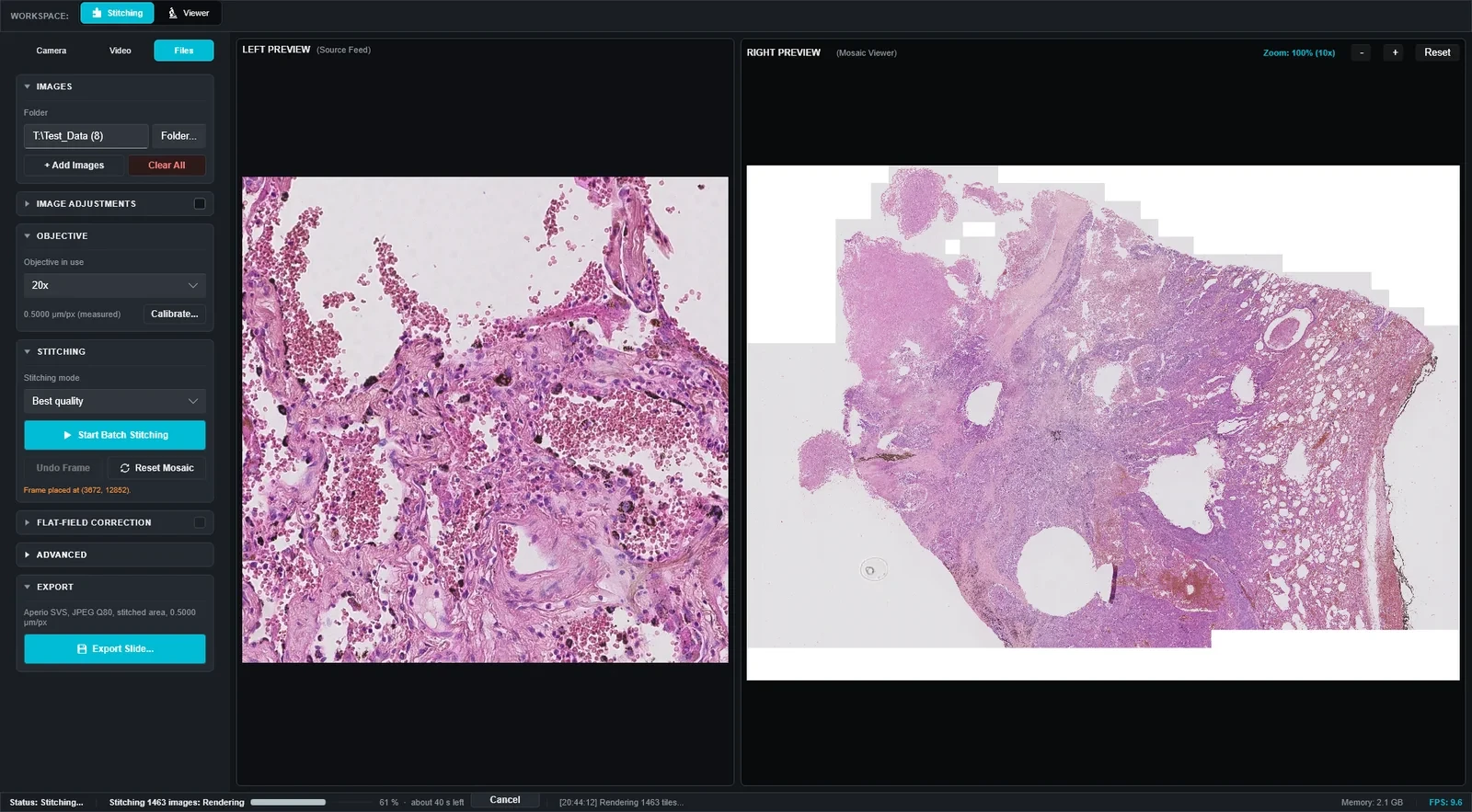
- tiles stitched into one slide
- 1,463
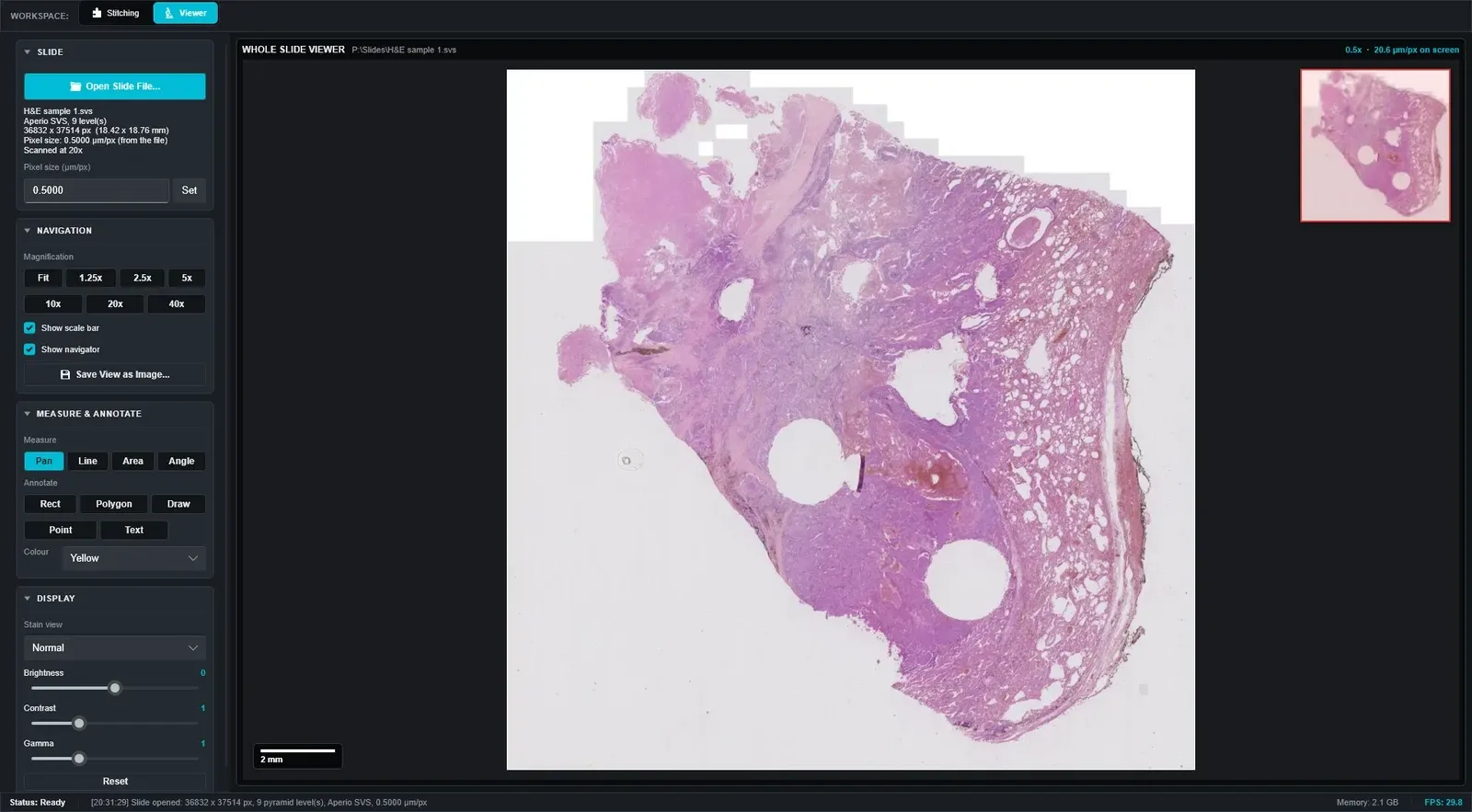
- pixels in that slide
- 36,832 × 37,514
- camera driver families
- 11
Highlights
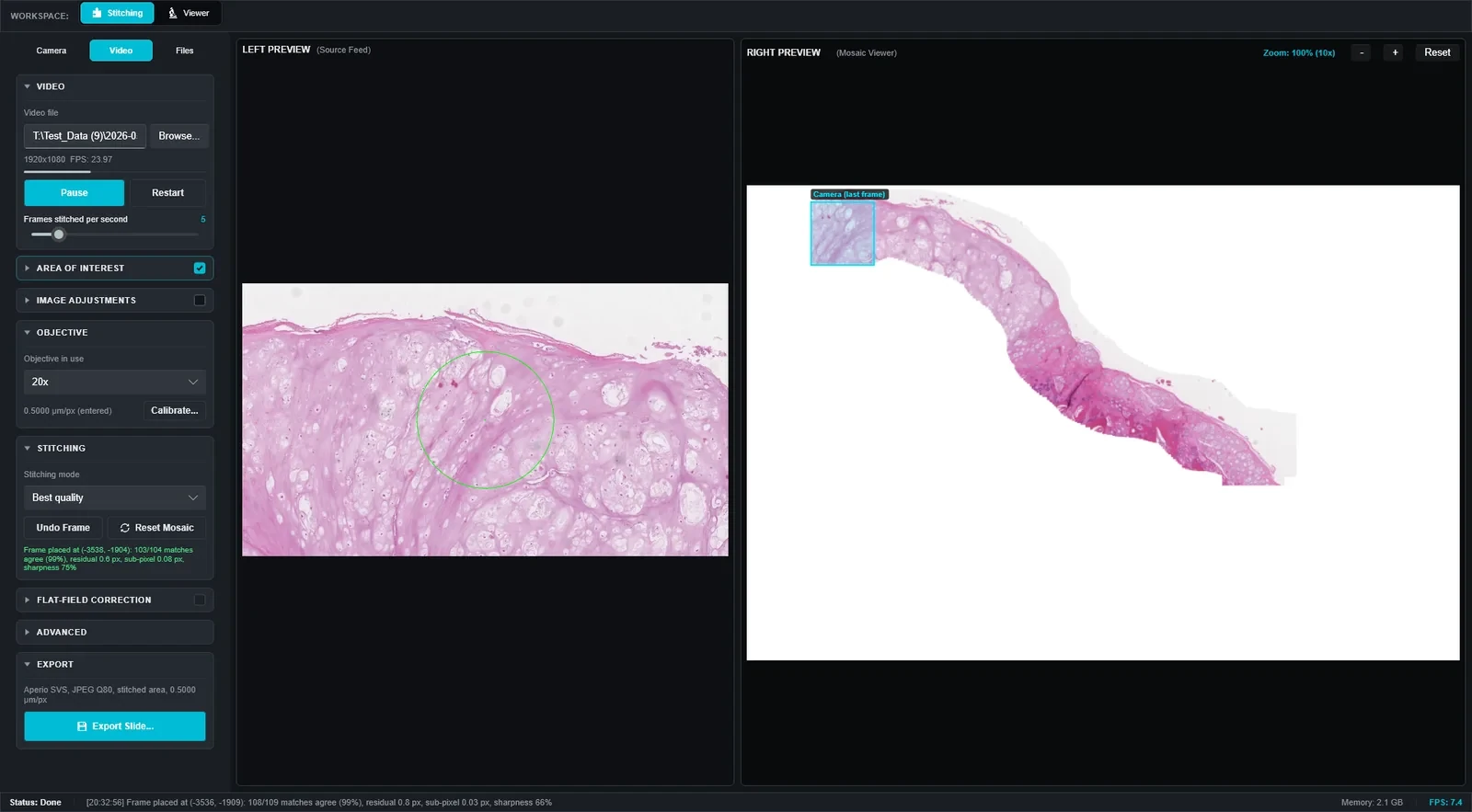
- Engineered a high-performance C++ desktop application for real-time microscope feed stitching, using OpenCV and libvips for heavy image processing.
- Managed the complete deployment lifecycle — packaging, certifying and publishing the commercial application on the Microsoft Store.
Overview
PixelScan WSI is a side project that comes from my veterinary training. Digitising glass slides — H&E, special stains, IHC — is everyday work in pathology teaching and research, but dedicated slide scanners cost tens of thousands of dollars. PixelScan WSI turns a brightfield microscope, a camera and a Windows PC into one: move the slide by hand and every frame is matched and stitched into a single large slide, which can be viewed, measured, annotated and exported in formats that open directly in QuPath, OpenSlide, ASAP and OMERO.
Breakdown
Stitching pipeline
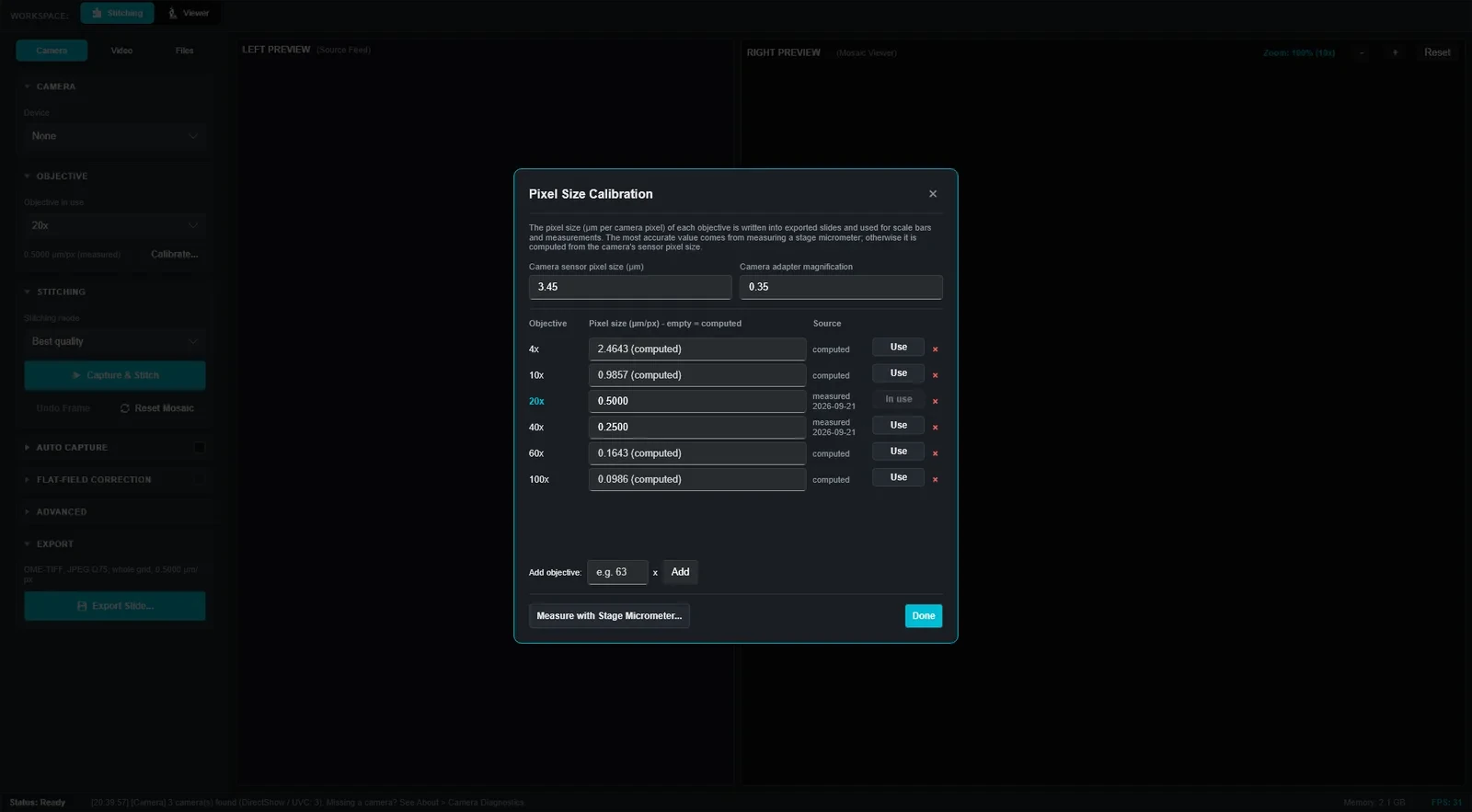
- Three inputs — a live camera, a video of the slide, or a folder of tiles (PNG, JPEG, TIFF, BMP).
- Registration — feature matching, then refinement to a fraction of a pixel.
- Global alignment for tile folders, so errors don’t accumulate across large grids.
- Seamless blending — multi-band blending hides seams; flat-field correction and exposure matching even out the illumination.
- Quality flags for weak matches and blurry frames, with undo.
Gigapixel on an ordinary PC
The mosaic lives on disk rather than in memory, so gigapixel scans run on normal hardware. Projects autosave every 30 seconds with crash recovery, and long jobs report progress and time left and can be cancelled.
Real whole-slide files
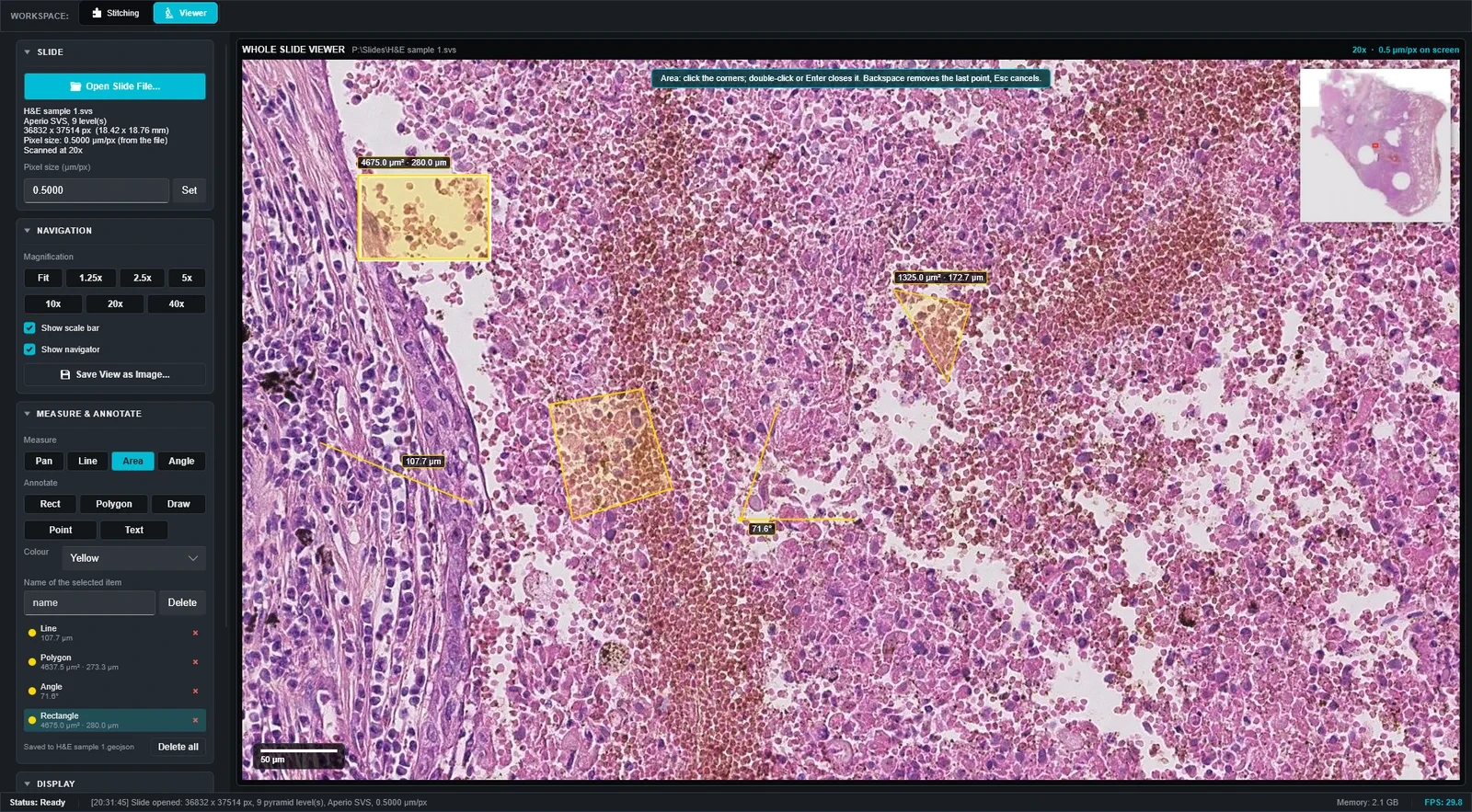
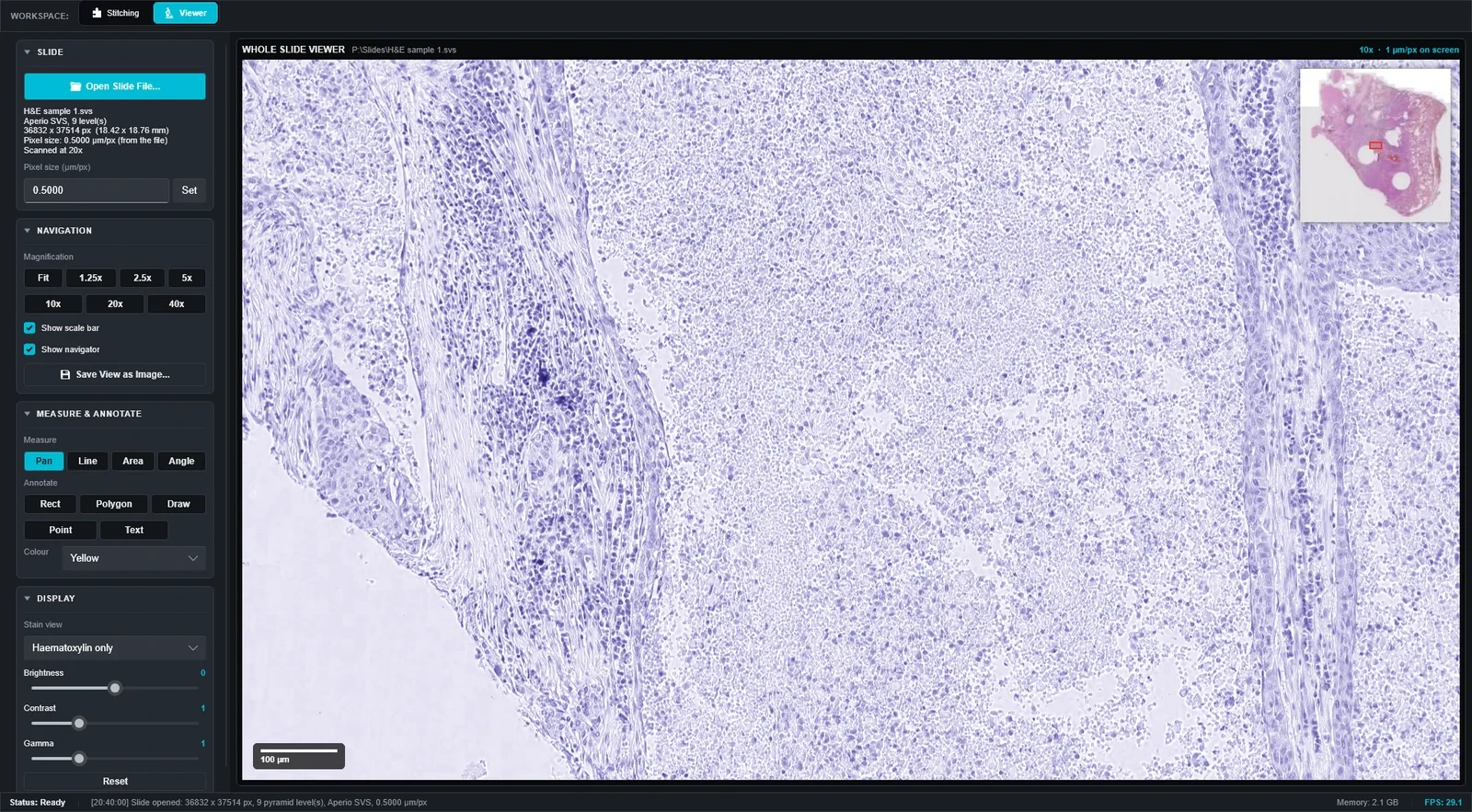
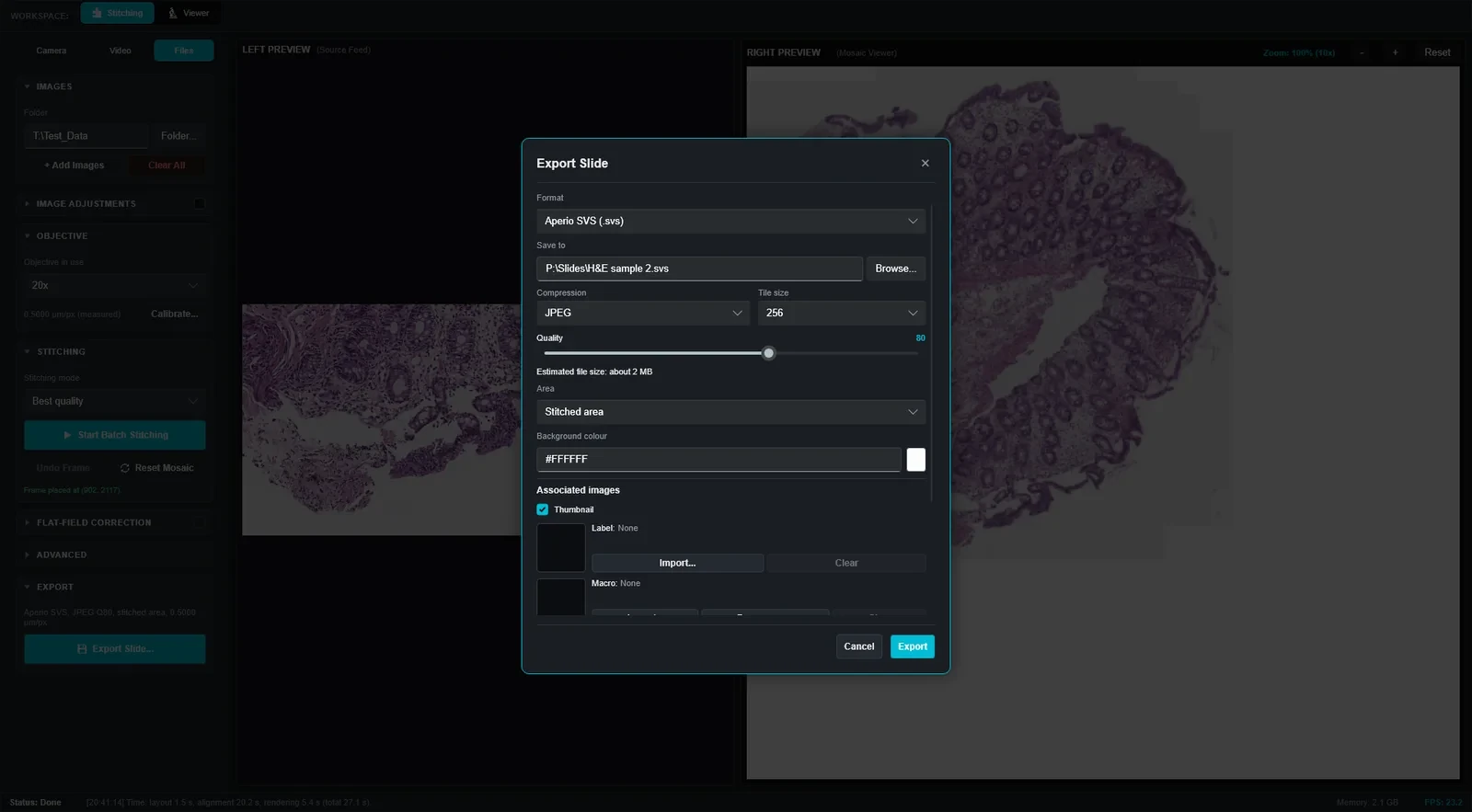
Exports are tiled pyramids — Aperio SVS with pixel size, magnification, label and macro images; OME-TIFF with OME-XML metadata; or pyramidal TIFF — compressed as JPEG, JPEG 2000, WebP or lossless, with the file size estimated before export. The viewer opens SVS, NDPI, MRXS, SCN, BIF and OME-TIFF, measures length, area, perimeter and angle, and separates H&E / DAB stains with Macenko normalisation.
Hardware support
Any USB camera with a standard Windows driver works, plus native SDKs for 11 driver families including DirectShow, TWAIN, ToupTek, Motic, Basler pylon, Teledyne FLIR Spinnaker, IDS, Allied Vision Vimba X, Hamamatsu DCAM, Photometrics PVCAM and Andor.
Shipping
The full release cycle for a commercial Windows app: packaging, Microsoft Store certification and publishing, with a 14-day free trial followed by a one-time purchase.
Gallery